
Long-Term Care in Indian Country: Honoring Tradition and Expanding Support
Long-term care in Indian Country is a community-focused system that blends traditional practices with the Western model of healthcare. It is centered on supporting Elders and individuals with disabilities in ways that uphold cultural values, promote independence, and maintain strong connections to family and community. But what exactly is long-term care?
The short answer is that long-term care, often called "long-term services and supports" (LTSS) is a combination of medical and non-medical services that help Elders and people with disabilities live as independently as possible for as long as possible.
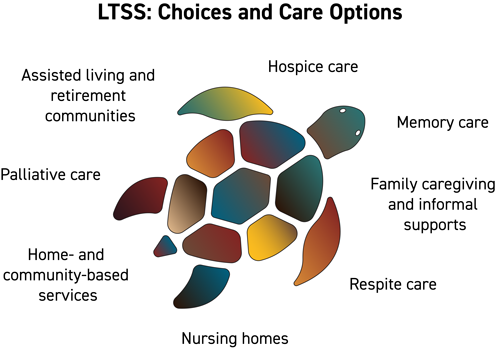
While federal guidance often references a continuum of care to describe the range of LTSS, in Native communities it is more sound to describe this as a set of flexible care options. This approach emphasizes the choices available to Native Elders and people with disabilities and their families to meet functional, health, and cultural needs, supporting independence and community connection rather than a linear progression through care settings.
Supporting and expanding tribal long-term care systems through LTSS ensures that everyone receives the care they deserve while remaining in the community they love.
Types of Long-Term Services and Supports: Choices and Care Options
Home and Community-Based Services
HCBS may include:
- Home healthcare
- Personal care assistance
- Adult day services
- Transportation
- Meal delivery
- Help with household tasks
Support starts with meeting the needs of an Elder or someone living with a disability right in their home with home and community-based services (HCBS). These services combine medical and non-medical supports to help Native Elders, individuals with disabilities, and those with chronic health conditions continue living safely in their homes or within their communities. By providing care in familiar environments and honoring cultural values, HCBS supports independence, preserves dignity, and strengthens community connections for our Elders and individuals with disabilities.
Caregiving
Across Indian Country, family caregivers are the foundation of long-term care for Elders and individuals with disabilities. Guided by cultural values and a strong sense of community responsibility, these caregivers — often unpaid — provide essential support, from helping with daily tasks to managing complex health needs. While this tradition of care is deeply meaningful, it can also come with challenges such as limited access to resources, emotional and physical strain, and the growing need for additional support services.
Residential-Based Care
Everyone's needs and health concerns are different and, while most people prefer to remain home, there may come a time when they need the kind of supports and medical-focused attention they cannot get at home. When someone needs a more advanced level of care, then options such as assisted living or nursing homes may be the next.
Tribal nursing homes and assisted living facilities provide culturally grounded care, offering language support and intensive services that allow residents to remain close to their communities and traditions.
Tribal retirement communities provide safe, supportive housing for Native Elders, offering opportunities for social engagement, wellness, and optional supportive services while respecting cultural practices and family involvement. Residents are generally independent or semi-independent but may benefit from assistance with meals, transportation, health management, or social and recreational activities. Some tribal retirement communities may be supported in part by Title VI of the Older Americans Act.
Respite Care
Respite care offers short-term, temporary support for Elders or individuals with disabilities who need help with daily activities. This care is designed to last for a few hours, a few days, or longer. In Native communities, respite care often takes place in the home, at adult day care centers, in nursing homes, or in specialized facilities. These services are especially important in Indian Country, where caregiving is deeply rooted in cultural values and often provided by family members. Programs funded through Title VI of the Older Americans Act help support caregivers by offering information, counseling, and access to respite care services. These efforts allow caregivers to rest and recharge while maintaining the ability to care for their loved ones with dignity and strength.
Palliative Care
Palliative care focuses on improving comfort and quality of life for people living with serious illness by easing pain, symptoms, and stress. It can be provided at home, in the community, or in facility-based settings, and telehealth can also serve as a pathway to receive this care. In tribal communities, culturally sensitive palliative care that incorporates family, spiritual traditions, and local practices is essential to meeting the unique needs of patients and their loved ones.
End of Life or Hospice Care
End-of-life care, or hospice care, provides comfort, dignity, and support for individuals facing a terminal illness, focusing on quality of life rather than curative treatment. It includes physical, emotional, spiritual, and social care for both the individual and their family — offering pain relief, symptom management, and help with important decisions. Care may be provided at home, in hospitals, nursing homes, or hospice facilities.
End-of-life care in Indian Country faces unique challenges due to cultural differences, geographical barriers, and socioeconomic factors. While hospice care programs exist, they are not always accessible or culturally grounded for all Native American communities.
Memory Care
Memory care specializes in helping people with Alzheimer's disease or dementia. Employees are specially trained to address the unique support needs and issues that are likely to arise for people with Alzheimer's disease or dementia. There are numerous initiatives focused on expanding Alzheimer's disease and dementia care in tribal and urban Native communities. A focus on building capacity for memory care resources will likely remain as awareness and needs for this type of care in Indian Country have grown.